Sbarc
A national digital platform connecting young people in Wales to creative opportunities
Problem
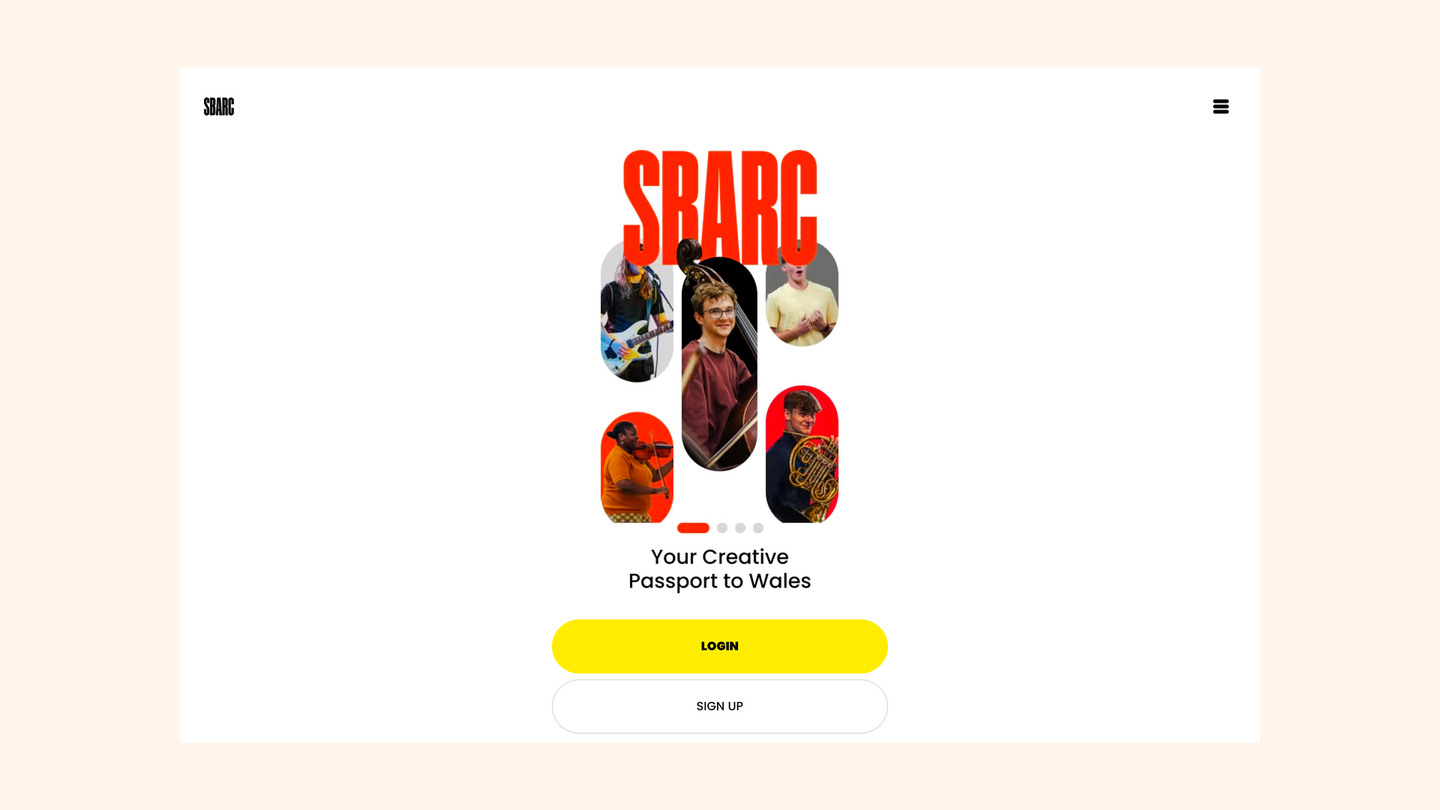
Wales has around 600,000 young people aged 13–22. Creative opportunities exist — youth ensembles, auditions, funded programmes — but they’re fragmented across dozens of organisations with no single place to find, apply, or track them. National Youth Arts Wales – led by innovation agency and jump – had already done the hard work: years of data in Airtable, a Figma prototype, and commitment from 85 creative organisations ahead of launch. I joined the and jump team to lead the build, embedded in their process, tools, and stakeholder conversations from day one, my task was to turn that groundwork into a live product called Sbarc.
The challenge was to define what the first version of the product actually was, then build an MVP that could work at national scale — for users aged 13–22, in two languages, following privacy-first children’s GDPR practices, fully WCAG 2.2 AA compliant, for a non-technical team to manage.
Product thinking
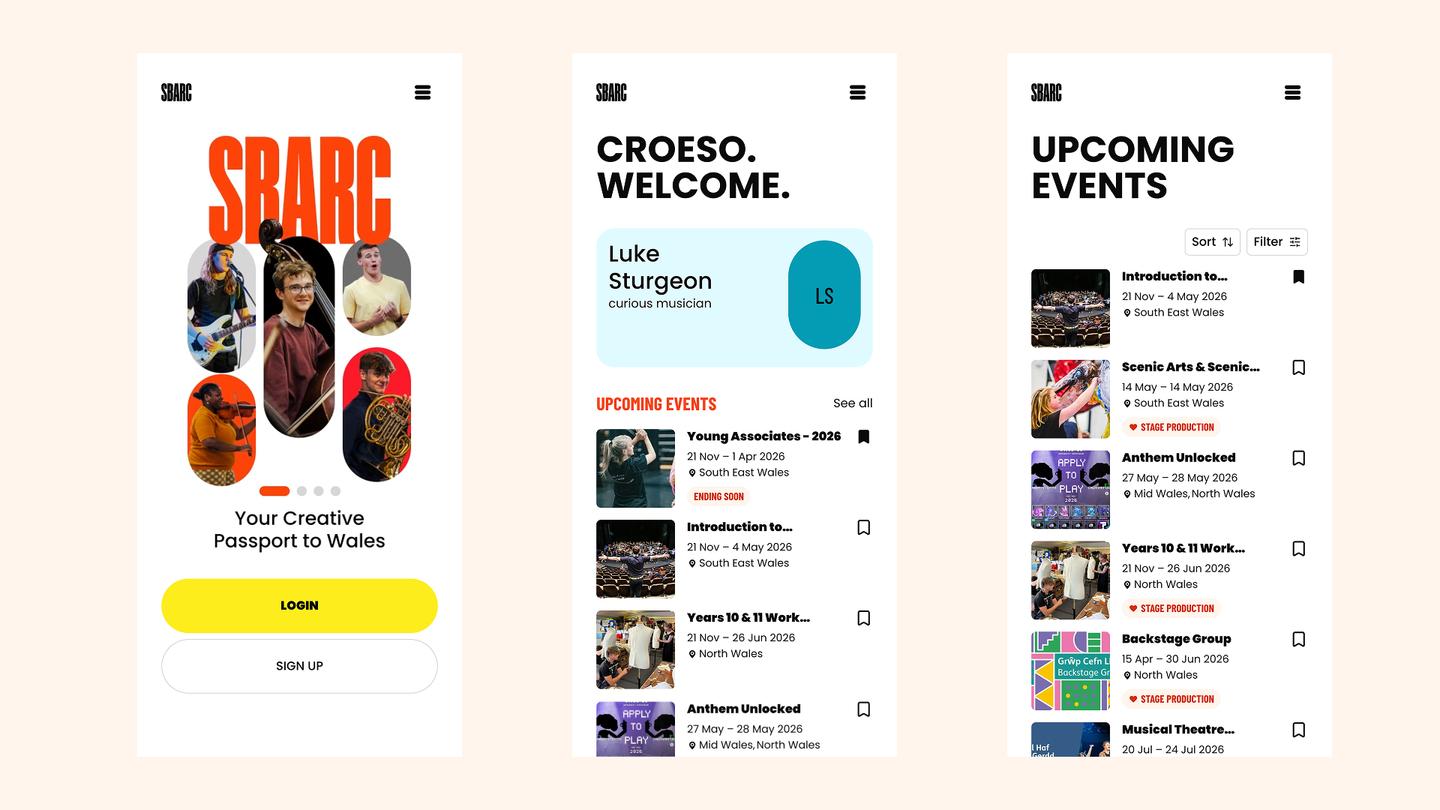
I contributed to and jump’s MVP scoping process — translating a long wishlist into a focused PRD that had five concrete user flows: account creation, opportunity discovery, applications, application tracking, and profile building. Working from the UI designer’s brand work, we defined a design system built upon highly customised shadcn components, establishing colour and typographic tokens across both Figma and the codebase.
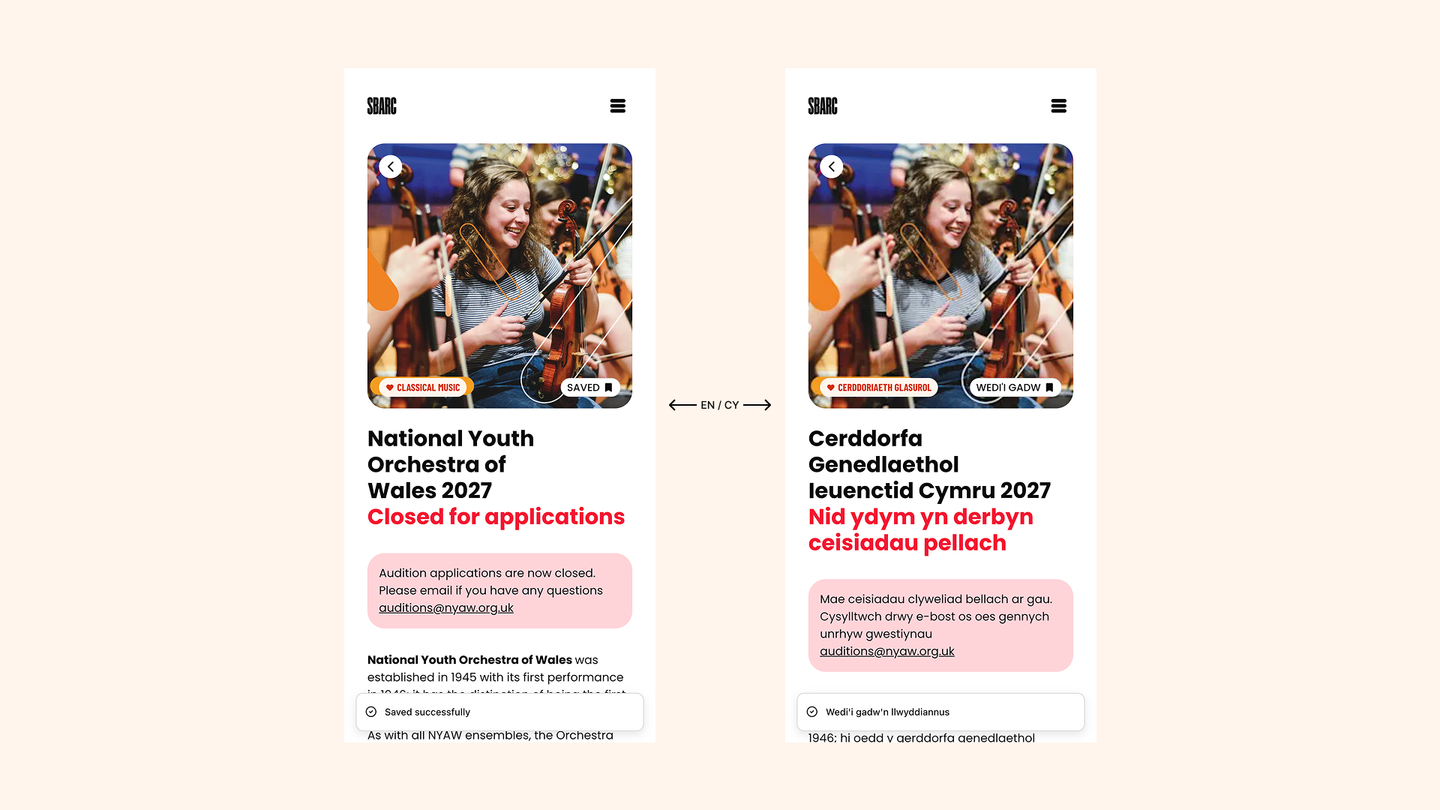
Welsh and English were equal languages throughout every component, content type, and user-facing message — legally required, not optional. I designed both the CMS and CRM-integration to enforce dual-languages creating unit and end-to-end tests for translation coverage and CI/CD pipelines flag gaps before they reach production.
Personalisation
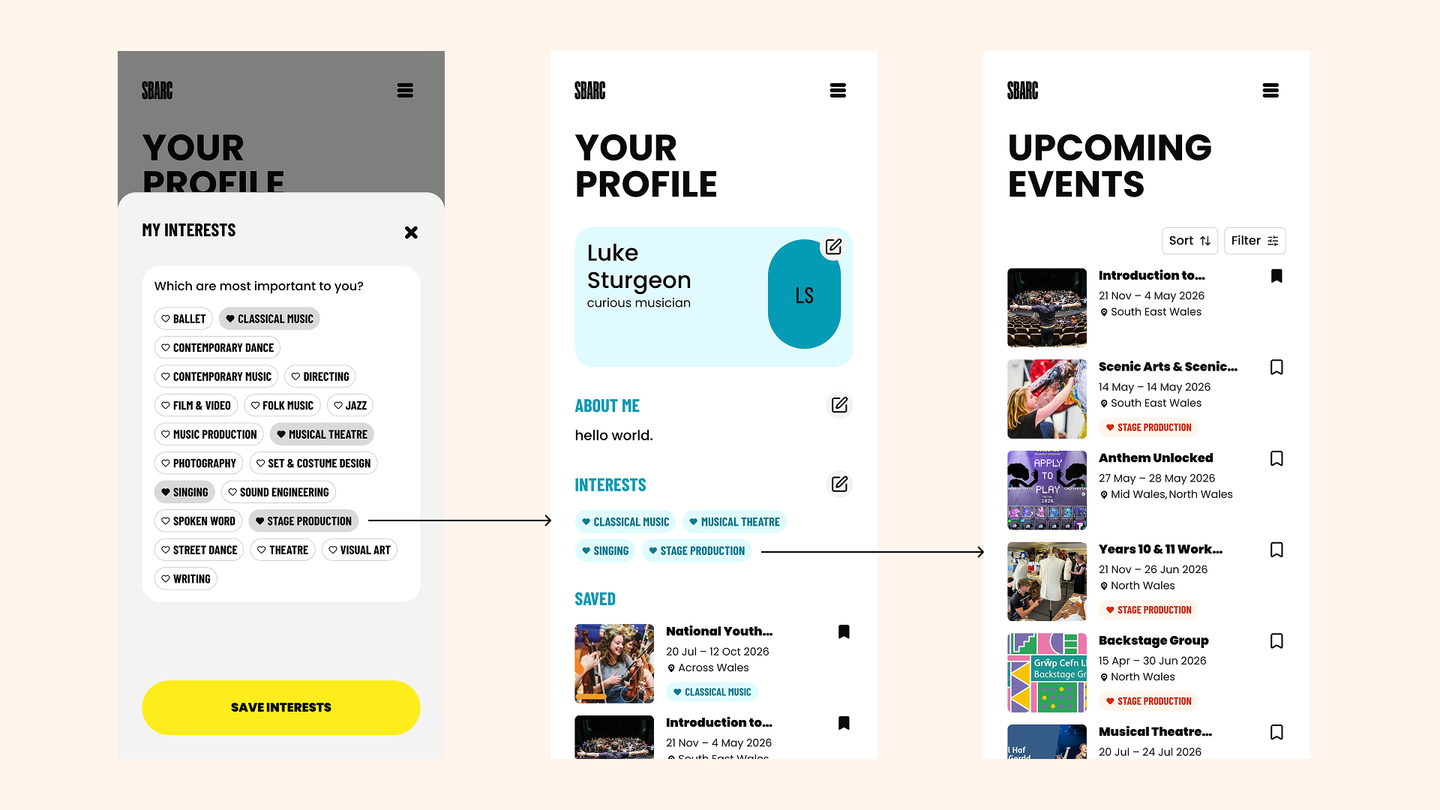
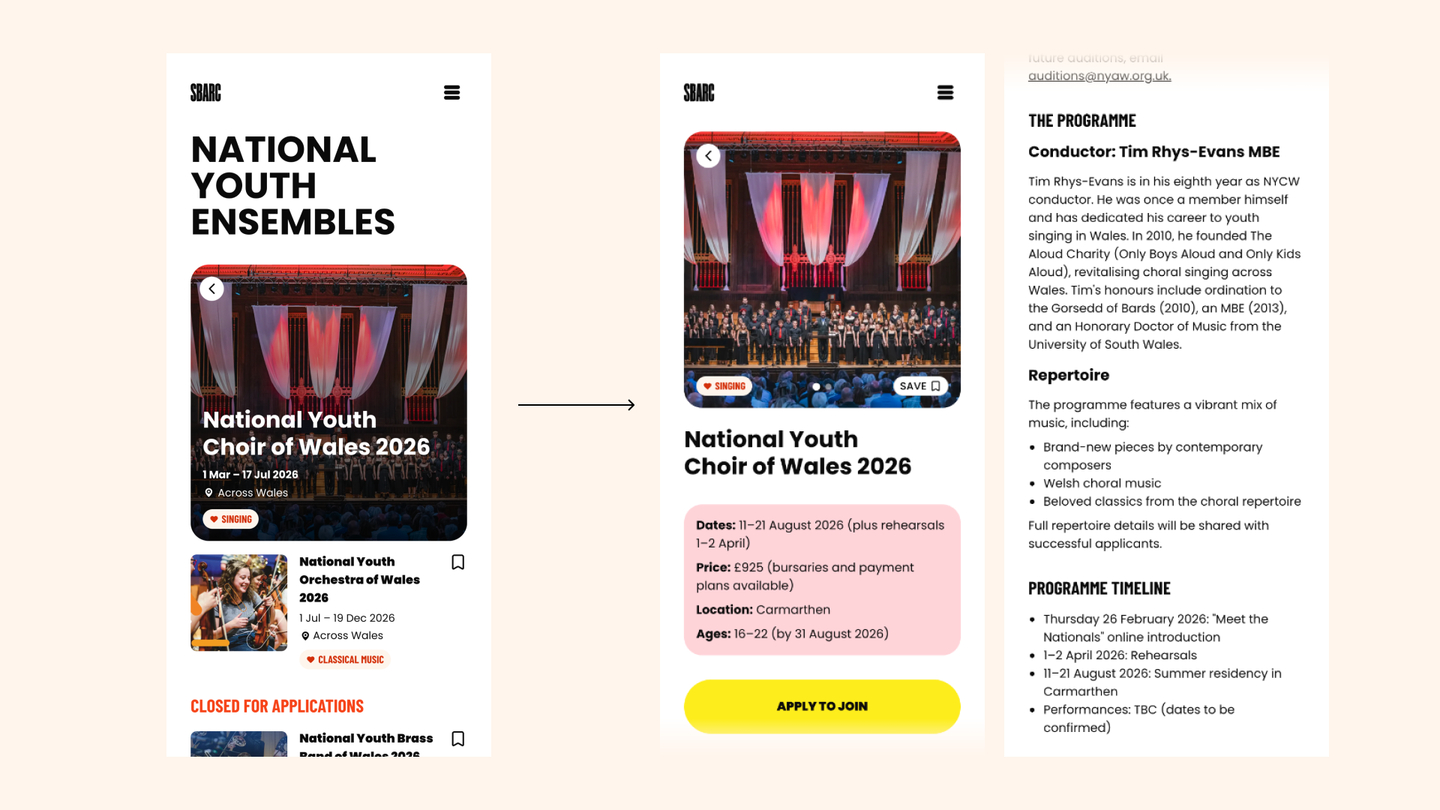
Every page renders in either language based on user preference. Each user also sees badges highlighting events that match their stated interests, and receives a push notification when a new matching opportunity is published.
Making this fast required a specific caching strategy: rather than caching pages (which breaks personalisation) or skipping the cache entirely (which is too slow), I cached heavily at the data layer — profiles, interest keywords, and event content — while rendering each page server-side fresh. The result is ~50ms page loads for fully personalised content, with no loading states or skeleton screens.
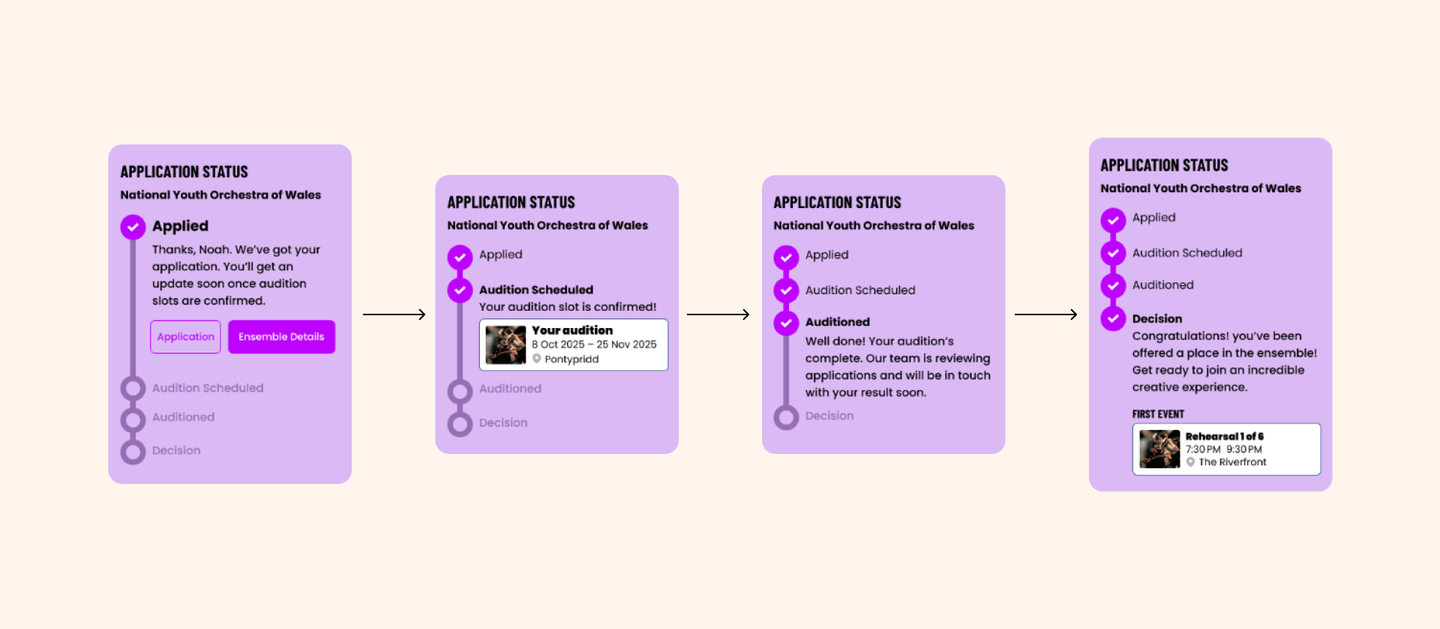
When a young person applies for a national ensemble their submission is captured in Airtable and triggers a sequence of automated and manual processes that help the NYAW team support the young persons application. This can include bursary applications, legal documents, several telephone calls for further information, depending on the young person’s age.
I mapped this internal workflow down to four UI states, so that every live application appears on the users Sbarc homepage and profile page, with straight forward language. The status and information about rehearsal details and timings and the final decision are live from Airtable, with zero additional work for the busy team – whilst caching carefully to avoid Airtable API rate limits.
Content submission
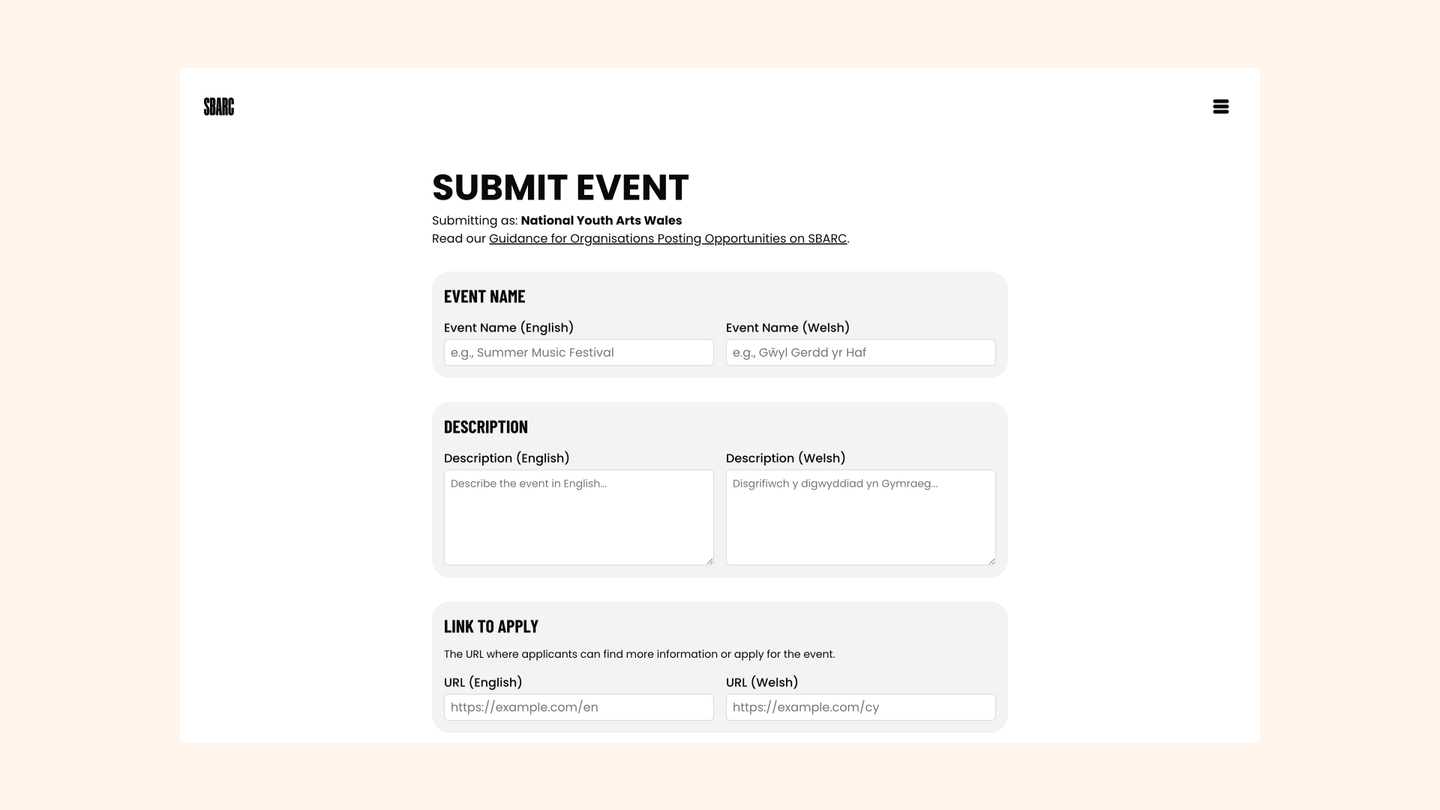
We needed to give creative organisations across Wales a low-friction way to submit opportunities without CMS access or technical knowledge. I built a submission flow within Sbarc itself: NYAW can review and approve organisations, then grant specific emails the ability to submit on their behalf. A guided dual-language form saves drafts directly into Contentful, then notifies both the submitter and the NYAW content team for review and publication.
Engineering decisions
The core challenge was Airtable: the right tool for the client, but its API rate limits would have caused the platform to fail at national scale. Rather than replace it, I designed a three-layer caching strategy — Serverless Postgres as the primary data layer, Next.js caching and revalidation as the middle tier, Airtable called only when strictly necessary.
Personally identifiable information is kept strictly separate from non-identifiable data — a structural decision that simplifies compliance as the platform scales with young people’s data.
- Next.js — full-stack flexibility and the server-side caching model that made the Airtable strategy possible
- Clerk — authentication with children’s data security requirements handled out of the box
- Contentful — bilingual CMS giving NYAW editorial control over both languages without touching code
- Vercel — hosting optimised for Next.js at national scale
- Resend — transactional email for applications, confirmations, and account management
- PostHog — privacy-first analytics pre-configured around NYAW’s six KPIs, live from day one
- PWA with push notifications — installable on mobile, because a 13–22 year old audience checks their phone, not their inbox
Result
We delivered across 10 weeks of sprints — bilingual, WCAG AA 2.2 compliant, end-to-end accessibility tested, built for national-scale traffic. We shipped with a live PostHog dashboard configured around NYAW’s six KPIs — so the team could measure performance from day one. 85 organisations committed to the platform ahead of launch — giving 600,000 young people in Wales a genuine creative passport from day one.